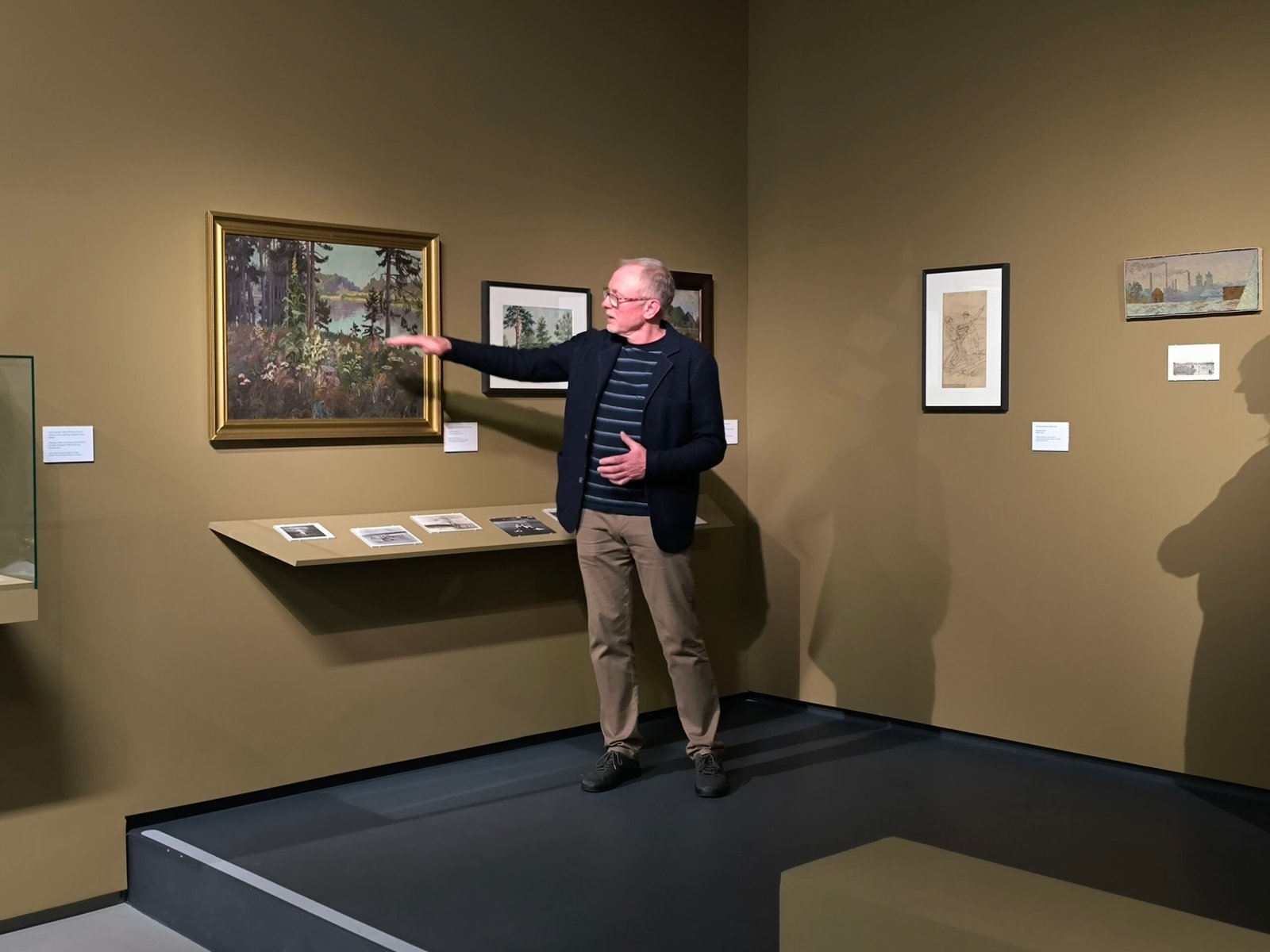
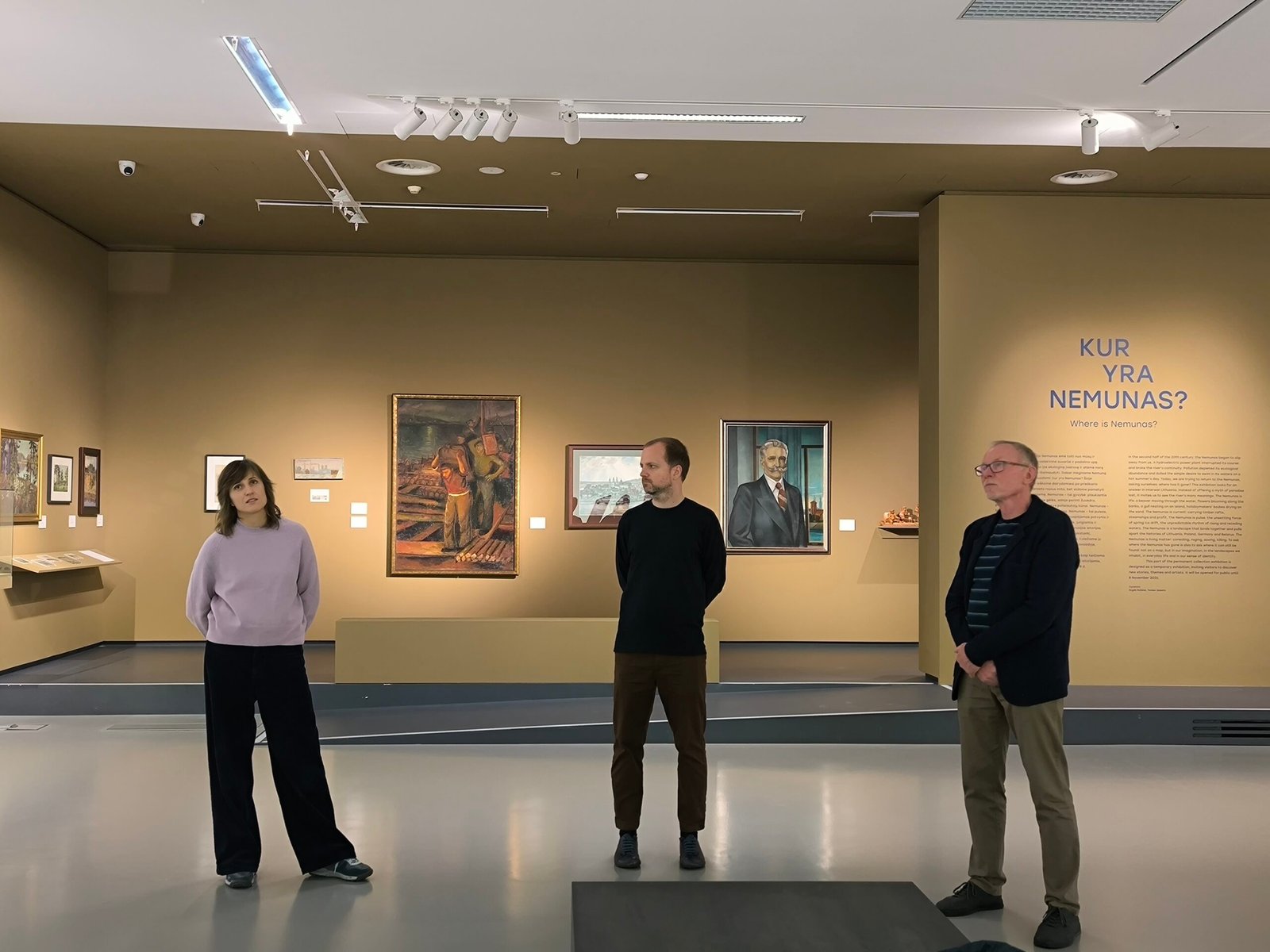
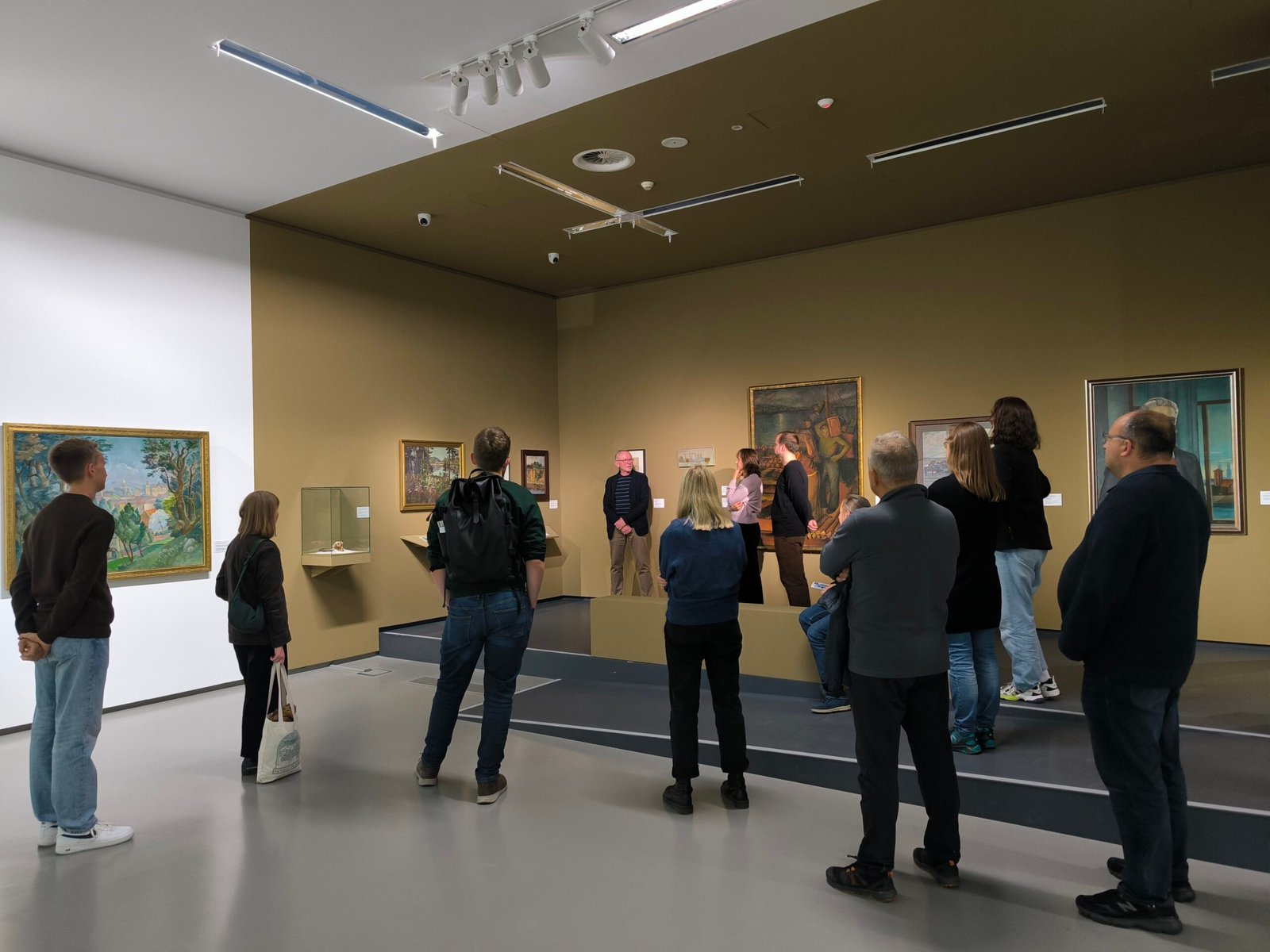
What place does the Nemunas occupy in our landscape, imagination, everyday life and identity? This question is raised by historians Tomas Vaiseta and Rugilė Rožėnė from the PAScapes, who are curating the exhibition “Where Is the Nemunas?” at the National Gallery of Art. The exhibition curators note that the Nemunas is home to a great many different animals and birds, yet in works of art depicting the Nemunas, practically the only animal to be found is the human being. In an attempt to fill this gap at least partially, exhibits were borrowed from the Tadas Ivanauskas Museum of Zoology in Kaunas. The exhibition curators spoke with Saulius Rumbutis, an ornithologist and head of the Scientific Curation of Collections Department at the museum, about the significance of the Nemunas, its ecosystems and the changes that have taken place over the past hundred years.
When we decided with our colleagues to study the Nemunas from the perspective of social history, at first it seemed that we had discovered a fairly new subject of research. However, we soon realised that both in the cultural sphere and elsewhere in the world, there is enormous interest in rivers, their history and the relationship between humans and rivers. What do you think this interest is connected to?
Perhaps to the changes taking place in rivers. After all, when we talk about rivers, rather troubling thoughts come to mind. For various reasons, our rivers are losing their natural character, and this has been happening for many decades. Human activity has contributed most to this. New areas of arable land were needed, so meadows, wetlands and forests were drained. Small streams were no longer replenished with water, and larger rivers also lost water – this disrupted the hydrological regime. We have very few of those wetlands, our treasure, left. Only fragments have survived, and they are the foundation of all rivers. And then there is the impact of climate change.
Another thing is that during the Soviet period, large quantities of fertilisers and various pesticides began to be used in agriculture, and these travelled through ditches into rivers. As a result, biodiversity experienced major disturbances. Overfertilised natural riverbanks have now become heavily overgrown with lush vegetation of little ecological value, in which certain animal species are not particularly fond of living. And speaking of the present, attention should be paid to particularly intensive kayaking tourism. Routes have been established even along the most secluded, beautiful and valuable rivers and streams. Increased pollution is observed, vegetation is damaged by paddles, and wildlife is deprived of peace. So it is a double-edged sword – recreation is certainly wonderful, but we cause considerable damage to nature.
Let us talk specifically about the Nemunas. As a river, the Nemunas seems very important in the cultural sphere – there is the Nemunas region, the Nemunas as the father of rivers, and so on. What is the actual place of the Nemunas in the region, not culturally, but from a natural perspective?
In Baltic mythology, the crowned grass snake is a symbol of longevity and strength. The winding Nemunas River resembles a crowned grass snake, whose crown is the Nemunas Delta. Biodiversity there is exceptional: flooded meadows, various oxbow lakes, very rare birds breeding there, and various other animals living there. With its fish, amphibians, reptiles and abundance of insects around it, the Nemunas is a source of food for birds and mammals. In spring and autumn, enormous numbers of migratory birds stop there. Rare aquatic warblers breed here, along with various species of ducks, waders and birds of prey. Thus, the Nemunas River is important to all forms of life. The healthier the river, the more abundant the wildlife around it will be.
Even before our meeting, you mentioned that this grass snake is constricted by two concrete rings. What are they and how do they constrict it?
One is located near Kaunas, the other near Grodno. These are hydroelectric power plants that have closed off the Nemunas River. It might seem that there is nothing wrong with that – we have energy. However, for migratory fish that travel from the sea to spawn in the upper reaches, the Nemunas River is closed. For example, salmonids can no longer swim further upstream. When you disrupt the movement of fish, it also affects other wildlife.
In the exhibition, we tried to recall the characteristics of the Nemunas as a river. One of them is its pulsation, its floods. It is believed that the Kaunas Hydroelectric Power Plant stopped the floods. Has the elimination of this pulsation affected the environment?
Without a doubt. The banks of the Nemunas River are relatively flat, and there are oxbow lakes. Over thousands of years, rivers change their course and direction, but the old riverbed usually remains full of water and is inhabited by various species. From a biological point of view, these are very valuable areas. When there were no dams, people suffered from floods, but in spring those floods filled the low-lying riverbanks and oxbow lakes, creating wet meadows where various birds bred and where other animals and plants were abundant.
Let us look at the exhibited landscapes of the Nemunas, most of which were painted during the interwar period. Looking at them and at the Nemunas today, it is obvious that changes have taken place, which the artists captured. What are they?
The works are very beautiful, but if you wanted to see such views today, you would have to walk around for quite a long time, and some you would not see at all. Due to human activity and excessive amounts of fertilisers, especially nitrogen, today we rarely see sandy riverbanks or natural meadows of various types. And their value was great because they were home to very specific species of insects, amphibians, reptiles, birds and mammals. Herbaceous vegetation, reeds, cattails and willows began to grow along the banks. To reach the river, you have to push your way through bushes, and you will hardly see any natural flowering meadows anymore.
We will also hardly see isolated pine trees without undergrowth, surrounded by natural grassy clearings. European rollers, which were once abundant in Lithuania, used to breed along the banks of the Nemunas, in old hollow pine trees or other trees. Now we have only a handful of European rollers left, and we may lose them completely. Another thing is the steep banks. Sandy ones, needed by various plant species and very specific insect species. Sand martins dig burrows in such banks, as does the very beautiful bird, the kingfisher. But very few such banks remain along the Nemunas.
When we approached you about possible exhibits, you suggested a beaver skull, a swan mussel shell and a common tern egg. Could you explain why you suggested these?
We chose the beaver as an interesting mammal, extraordinarily hardworking and interesting in terms of its biology. We thought that a skull with orange teeth could also be visually interesting. Beavers have a dual significance. On the one hand, they dam streams and raise the water level, allowing birds to breed and fish and amphibians to live. After all, most streams and ditches have simply dried up – the beaver is their saviour. On the other hand, the water raised by beaver dams floods and fundamentally changes natural habitats. It damages agricultural land and forest areas.
Another exhibit is the swan mussel, the largest mollusc in Lithuania. It is an aquatic mollusc that feeds on plankton by filtering water. When wading in the river or walking along the bank, you can often see the shells of living or dead molluscs.
And, of course, common terns, which breed on the islands of the Nemunas, making their nests on fine gravel. If a bird sees you getting out of that wretched kayak on an island and flies away, you may walk past its breeding site without even noticing it, because the eggs laid in a small depression in the gravel blend into the surrounding environment in colour. However, such human visits to the islands often frighten away the birds breeding there.
If we imagined nature lovers and researchers who, for example, walked along the riverbanks and observed birds during the interwar period, what did they see? Are the birds they encountered very different from those of today?
I think it would not be us who would fall over in astonishment, but those interwar birdwatchers. It used to be said that a human life is too short to witness major changes in nature. Nowadays, we see those changes here and now, and you see them too. Did we see so many great white egrets, common cranes, great cormorants and herring gulls when we were young? It is likely that you did not see them at all. Now you see them everywhere: in fields, near rivers and lakes. If we travelled back to the interwar period, we would be surprised not so much by the diversity of bird species as by the sheer abundance of birds. However, if an interwar researcher were to come back to life, he would be even more surprised – he would observe species that he had never seen in Lithuania at all. And this is not particularly encouraging, because a sudden increase or decline in the abundance of species indicates that something is wrong, probably first and foremost changes in habitats and climate.
Agnė Kereišiūtė