We are pleased to share reflections and highlights from the Arqus Spring School in Vilnius, originally published by the Arqus Alliance / Leipzig University. The article was written by Steven Rupp and is shared here for informational purposes, with full credit to the original publisher and author.
What makes cultural heritage contested? Who decides which traces of the past remain visible – and which disappear? A Spring School organised by the Arqus Alliance at Vilnius University in early June explored these questions. Over four days, 30 students and doctoral researchers from six Arqus universities – including five from Leipzig – spent their time examining European culture of remembrance.
Vilnius as a laboratory of collective memory
The Spring School was organised by the Arqus working group ‚Living Labs: European Heritage’, led by Dr Steffi Marung and Dr Janine Kläge (both from Leipzig) and Prof. Marija Drėmaitė (Vilnius). The group brought together Master’s students and PhD candidates from a wide range of disciplines from Leipzig, Maynooth, Minho, Padua, Vilnius and Wrocław. The event was hosted by the Faculty of History at Vilnius University and its (Post)Authoritarian Landscapes Research Centre (PAScapes). Vilnius, a city that experienced both the Holocaust and decades of socialist rule, was more than just a backdrop: it provided the perfect setting for dissecting Europe’s complex and often painful pasts.
„The most valuable aspect for me was the close connection between academic perspectives on the subject and the direct experience of Lithuania‘s landscapes, history and sites of memory. Equally important was the contribution of the participants themselves. The diversity of backgrounds – both academic and biographical – enriched the discussions considerably. It enabled us to compare how different societies deal with the legacies of authoritarian regimes and to reflect on contemporary debates surrounding difficult pasts, collective memory and identity.” Viviane Radtke, German Studies and Classical Antiquity student at Leipzig University
From the seminar room to the city
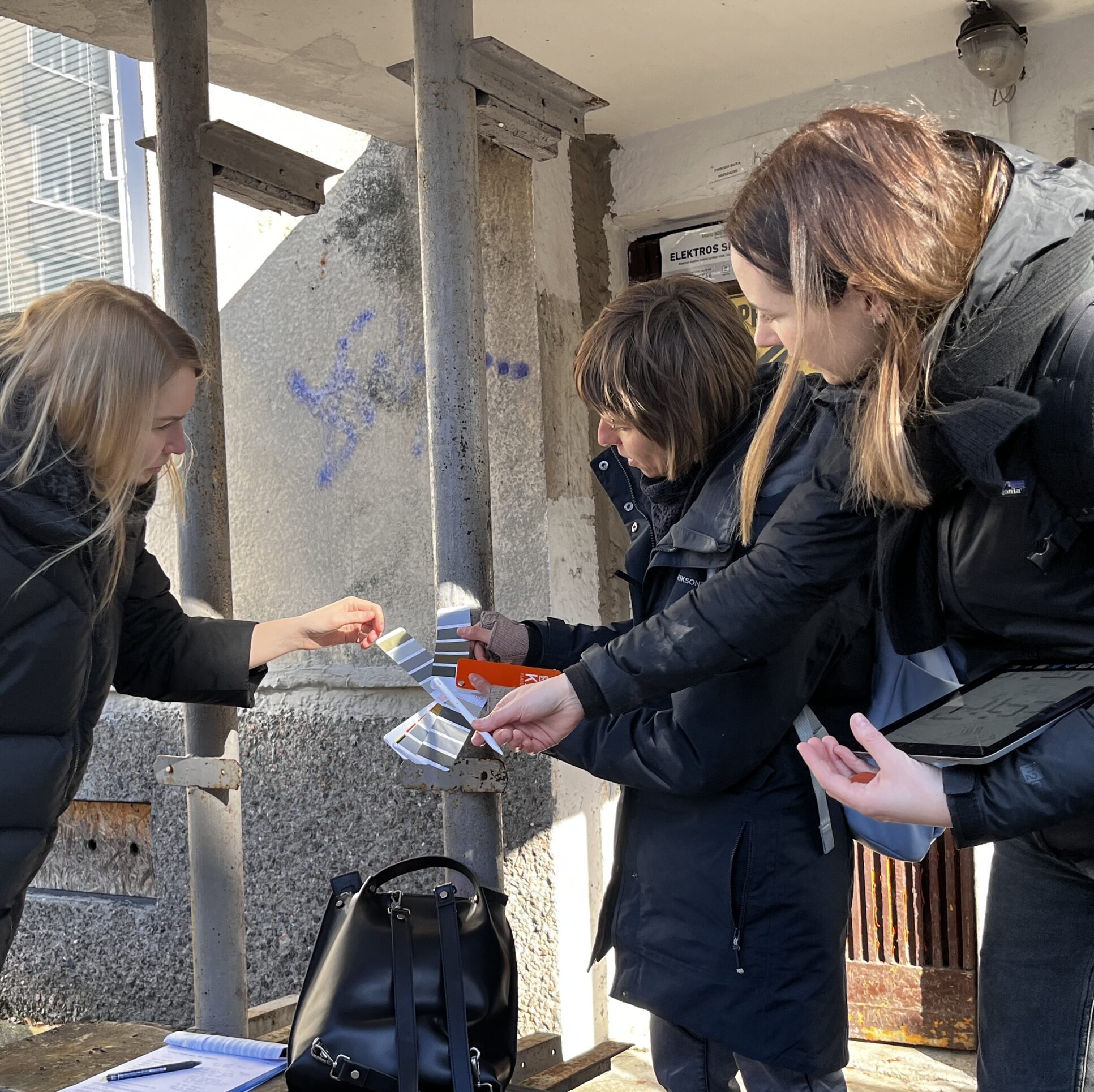
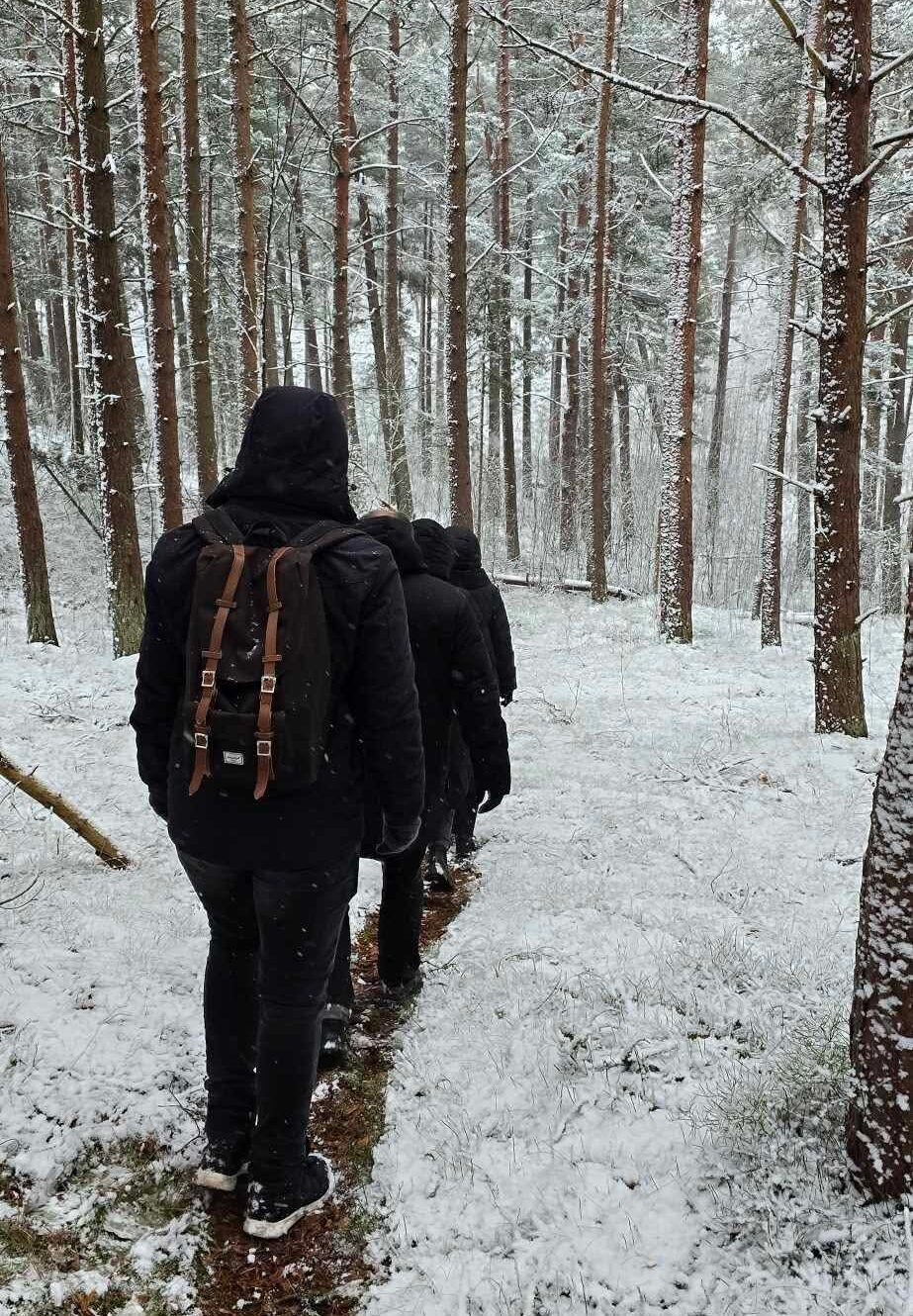
The programme was structured around three thematic focuses: dissonant legacies at universities, post-Holocaust landscapes, and socialist urban planning. Lectures and keynotes in the mornings provided the theoretical foundation for the afternoon’s excursions and fieldwork. For instance, Prof. Arnold Bartetzky (Leipzig) delivered a keynote speech on socialist urban planning, thereby preparing participants for an excursion to the Lazdynai – a district which is characterised by socialist housing developments. A roundtable discussion entitled „Critical Heritage Studies – Future Pathways in Cross-Regional Perspectives”, featuring Dr Steffi Marung, Dr Janine Kläge and Prof. Marija Drėmaitė, brought the programme to a close – before the group travelled on day four to the village of Šeduva, two and a half hours’ drive from Vilnius. There, the group visited the Lost Shtetl Museum, which reconstructs the life and the brutal annihilation of an entire Jewish community in a single night in 1941.
„Undoubtedly, the fieldwork and trips were the most enlightening to me, as we got to actually see and feel the heritage whose legacy was contested. The parallels I was able to draw between Lithuanian socialist heritage and that of my own home country in Kosovo through these experiences made me connect with and appreciate Lithuania’s history and culture, past and present, even more.” Erna Buçaj, European Studies student at Leipzig University
European identity as a living conversation
The Spring School highlights what lies at the heart of the Arqus Alliance: nine European universities and their members, who bring with them a unique wealth of historical experience – ranging from post-socialist and post-fascist pasts to colonial experiences from both the colonising and colonised perspectives. This diversity of perspectives lays the foundation for a critical, comparative dialogue, such as the one that took place in Vilnius – in historic seminar rooms, on bustling street corners, and on the coach journey to a small Lithuanian town whose Jewish community was to be erased from the history books 85 years ago. Building on the discussions and feedback from participants, the Arqus working group is already planning further joint teaching formats. For the subject of European cultural heritage is anything but exhausted.
Link to the article: https://www.uni-leipzig.de/en/newsdetail/artikel/dissonant-heritage-and-european-identity-arqus-spring-school-in-vilnius-2026-06-23