On September 24–26, a series of events organized by PAScapes researchers took place in Lazdynai as part of the annual European Heritage Days festival. The Lazdynai district of Vilnius, which is particularly popular among its residents and has attracted considerable attention from researchers, was entered into the National Cultural Heritage Register in 1993 (unique object code 16079). However, it is noticeable that this heritage is often overlooked as less valuable or less worthy of protection. Narratives about economic decline and the social stigma of such districts continue to appear in the public sphere, and there is a lack of awareness of their architectural quality and historical significance.
Mass housing districts can be interpreted as multi-layered post-authoritarian landscapes where political history, architectural innovation, and everyday social life intersect. Rather than reducing them to material reminders of a former regime, current discussions emphasize the multiple values of these spaces – including their urban planning concepts, architectural coherence, and the lived experiences embedded within them. The series of events aimed to highlight the mass housing district as a significant heritage site and to enable local residents and visitors to learn about the district’s values both theoretically and practically.
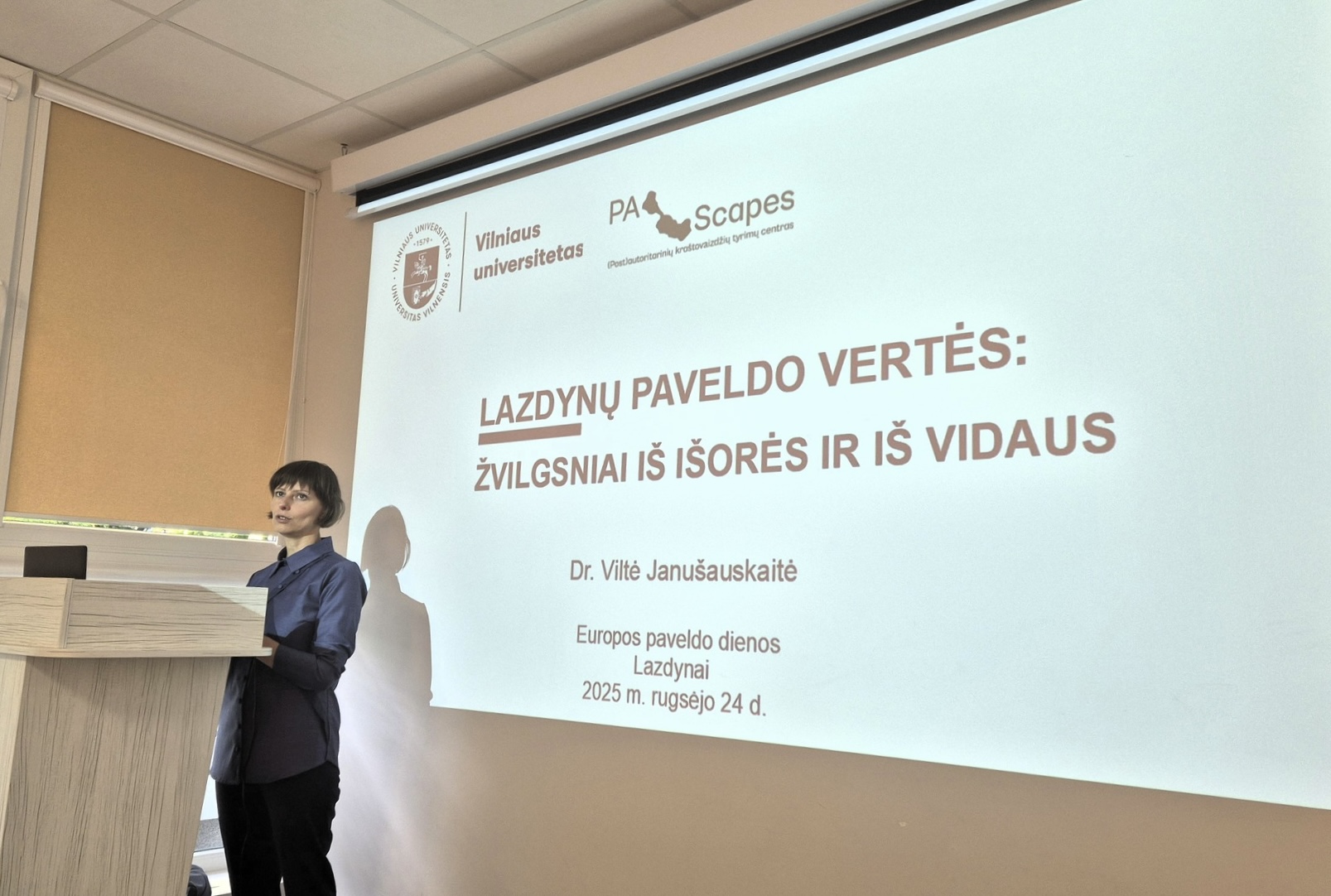
During the first lecture, Dr. Viltė Janušauskaitė gave a concise presentation on the history of the creation and construction of Lazdynai: its uniqueness in the context of the Soviet system, the awards it has received, and its inclusion in the register of cultural values. During the lecture, the researcher also presented her study on the first residents of the new district – their perception of what is beautiful, important, and worth preserving in Lazdynai. This data was then compared with recent opinions of local residents collected as part of the project.
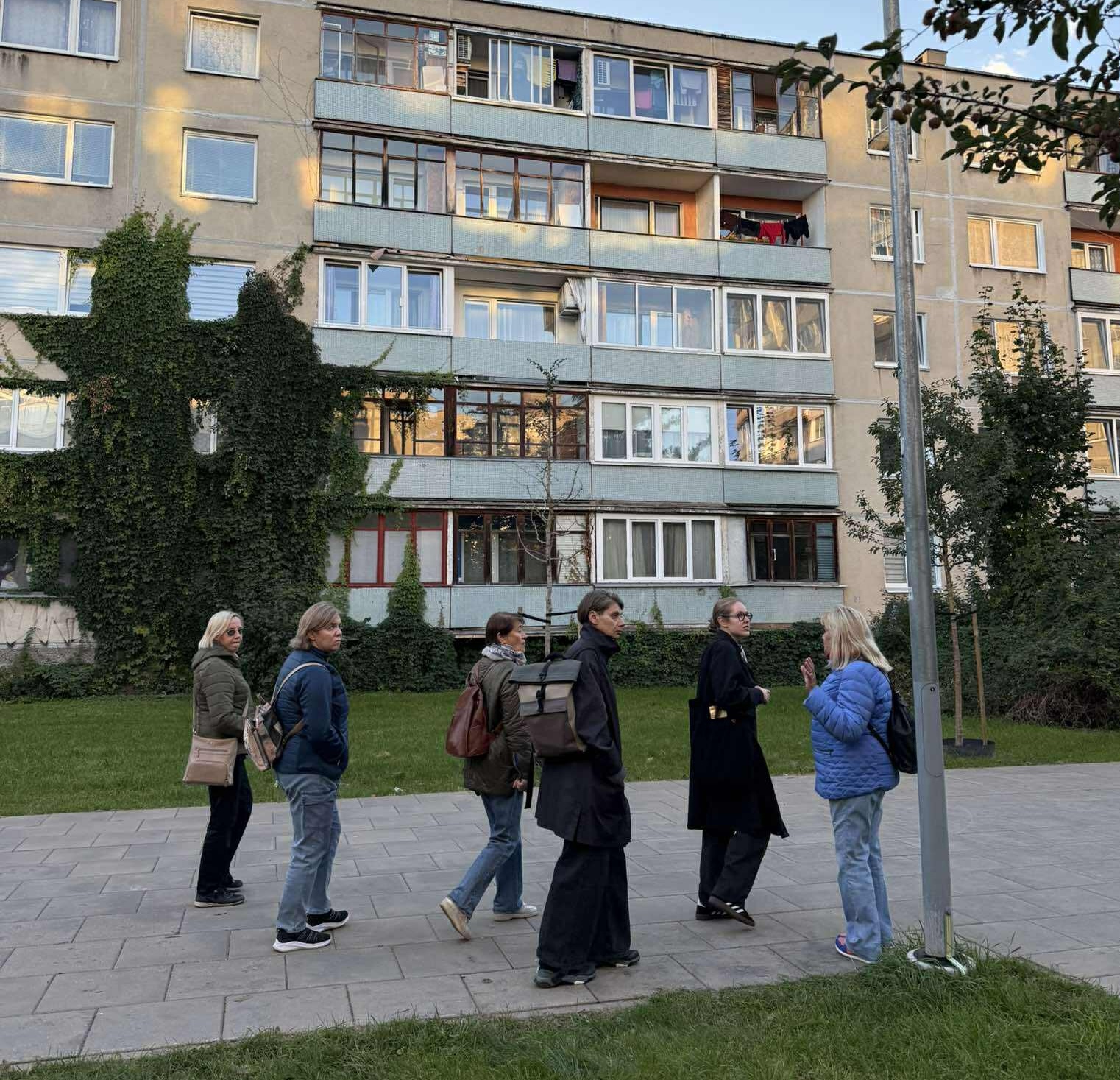
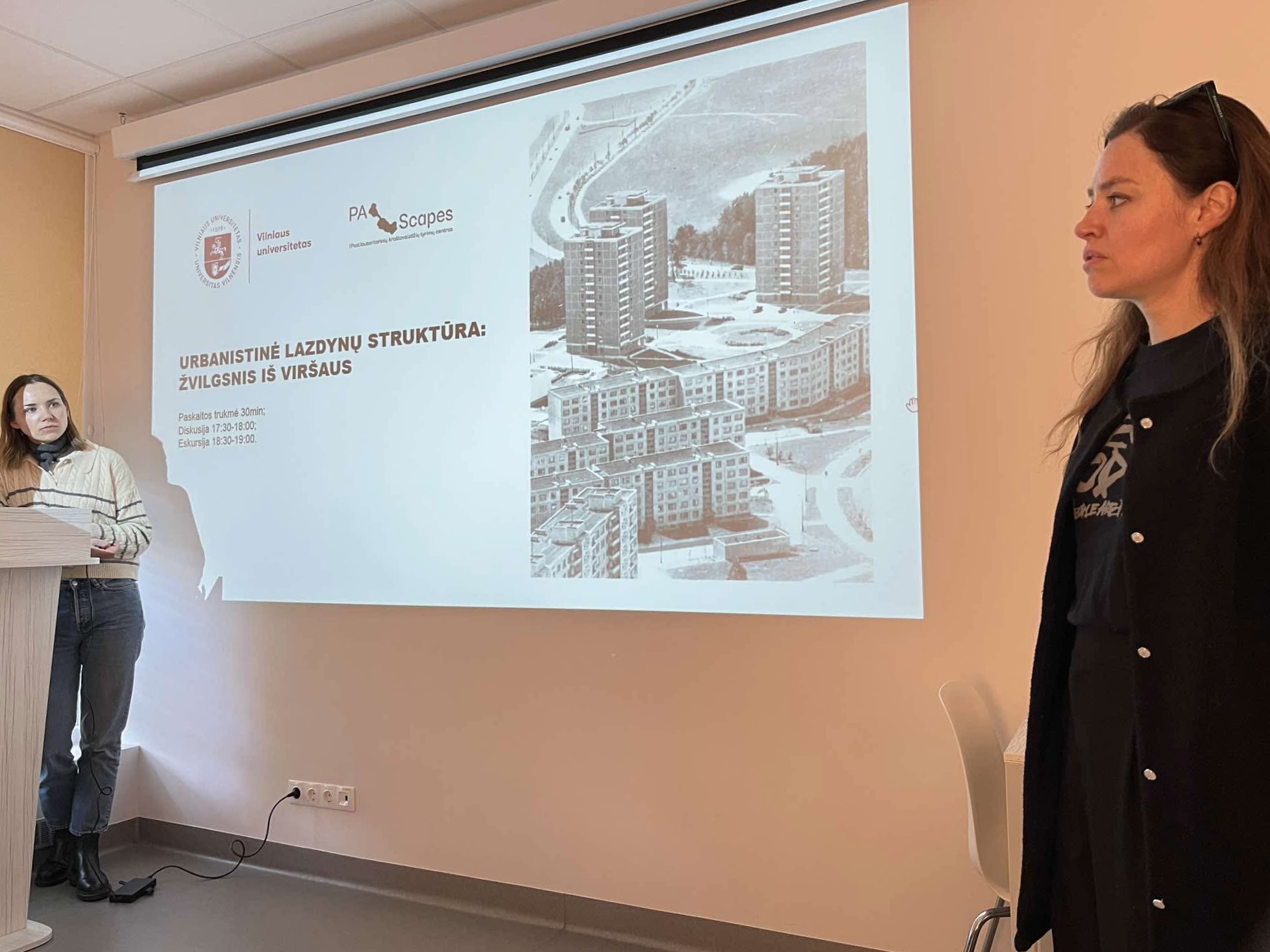
During the second lecture, architect Radvilė Samackaitė invited the audience to look at the composition and urban structure of Lazdynai from above. During the lecture, guests had the opportunity to learn about the principles of modernist planning, foreign influences and inspiration for the creators of Lazdynai, and the domestic service system that determined the specific planning of districts during the Soviet era. The story was supplemented by diagrams created by the architect, depicting the street network and the structure of the microdistricts in Lazdynai, as well as building typologies, the series and configurations of houses adapted to the site. Perhaps the most interesting aspect was the color scheme, which clearly shows that Lazdynai was not a gray district. When designing the district, the architects carefully considered how to place color accents: colorful mosaic balcony tiles, brightly painted interior balcony walls, and stairwell entrances.
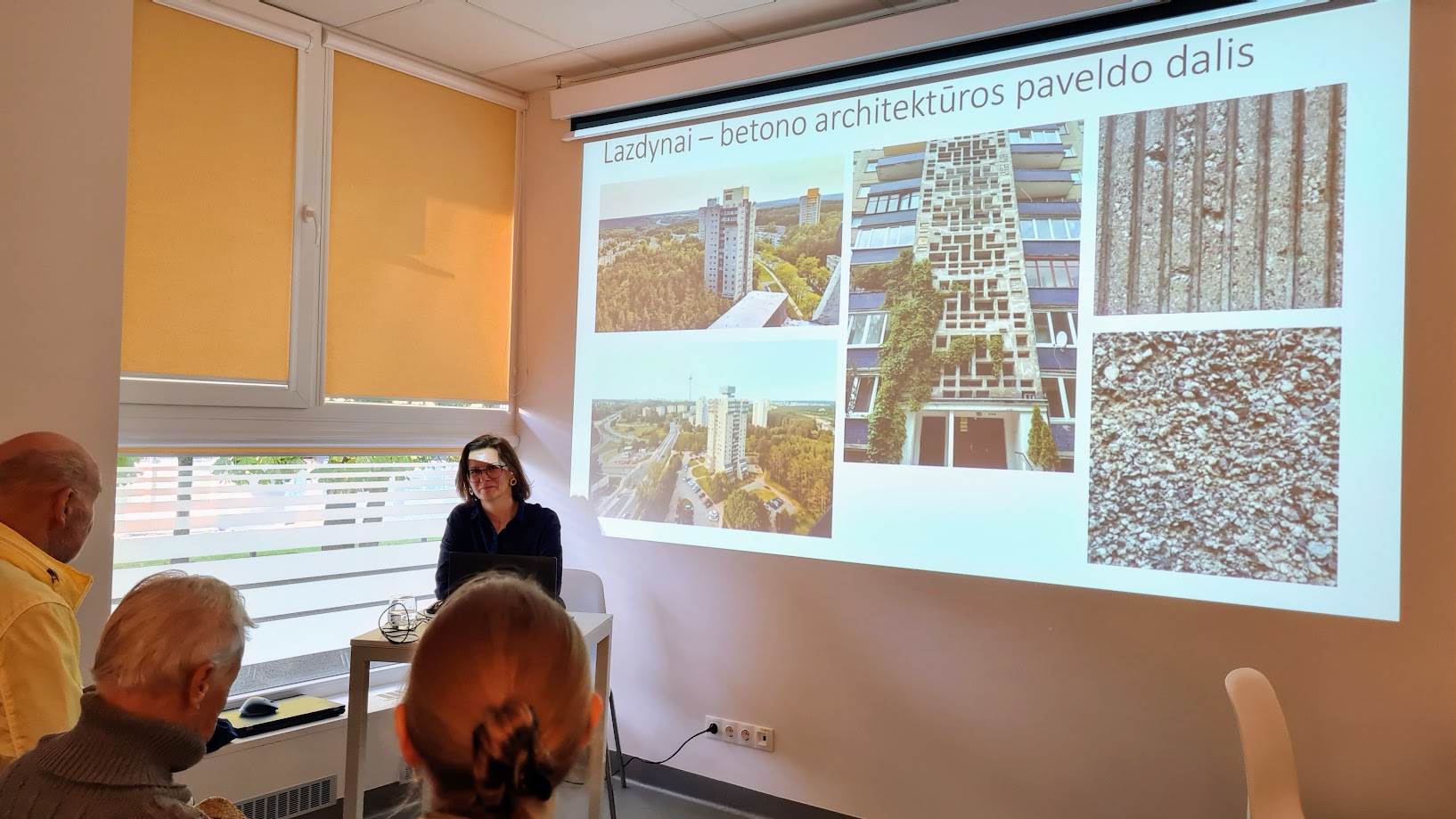
During the third lecture, Dr. Aušra Černauskienė shared her expert knowledge about concrete – the main building material used in Lazdynai, which actively shapes its visual identity. The researcher spoke about the types of concrete products, their different surfaces, the specifics of their production, and the difficulties and defects encountered during the Soviet era. Attention was also paid to the heritage aspect: in the researcher’s opinion, concrete heritage is still underappreciated, improperly maintained and managed, and during the renovation of mass-built districts, concrete surfaces are often lost without any attempt at preservation. This is particularly relevant to Lazdynai.
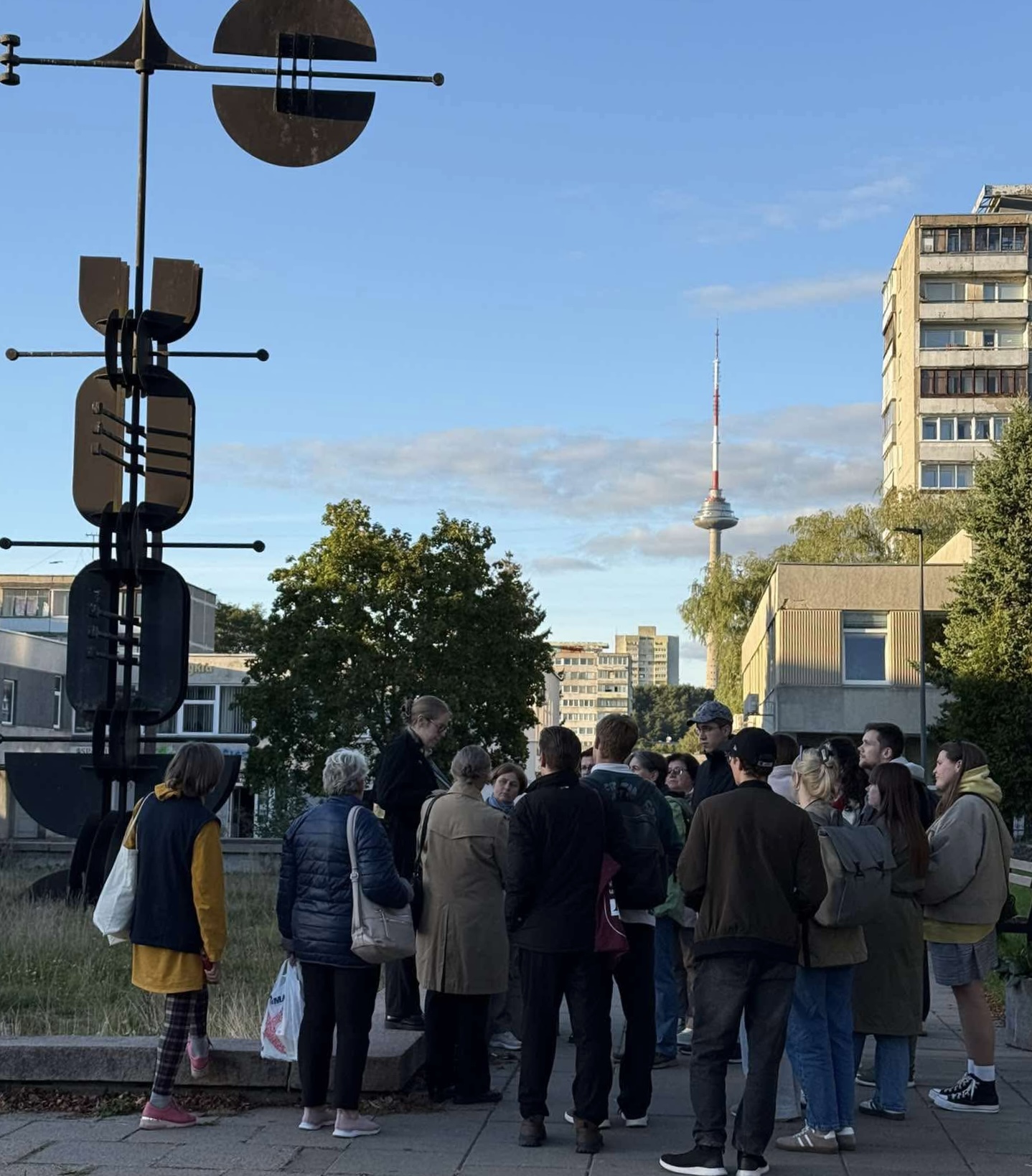
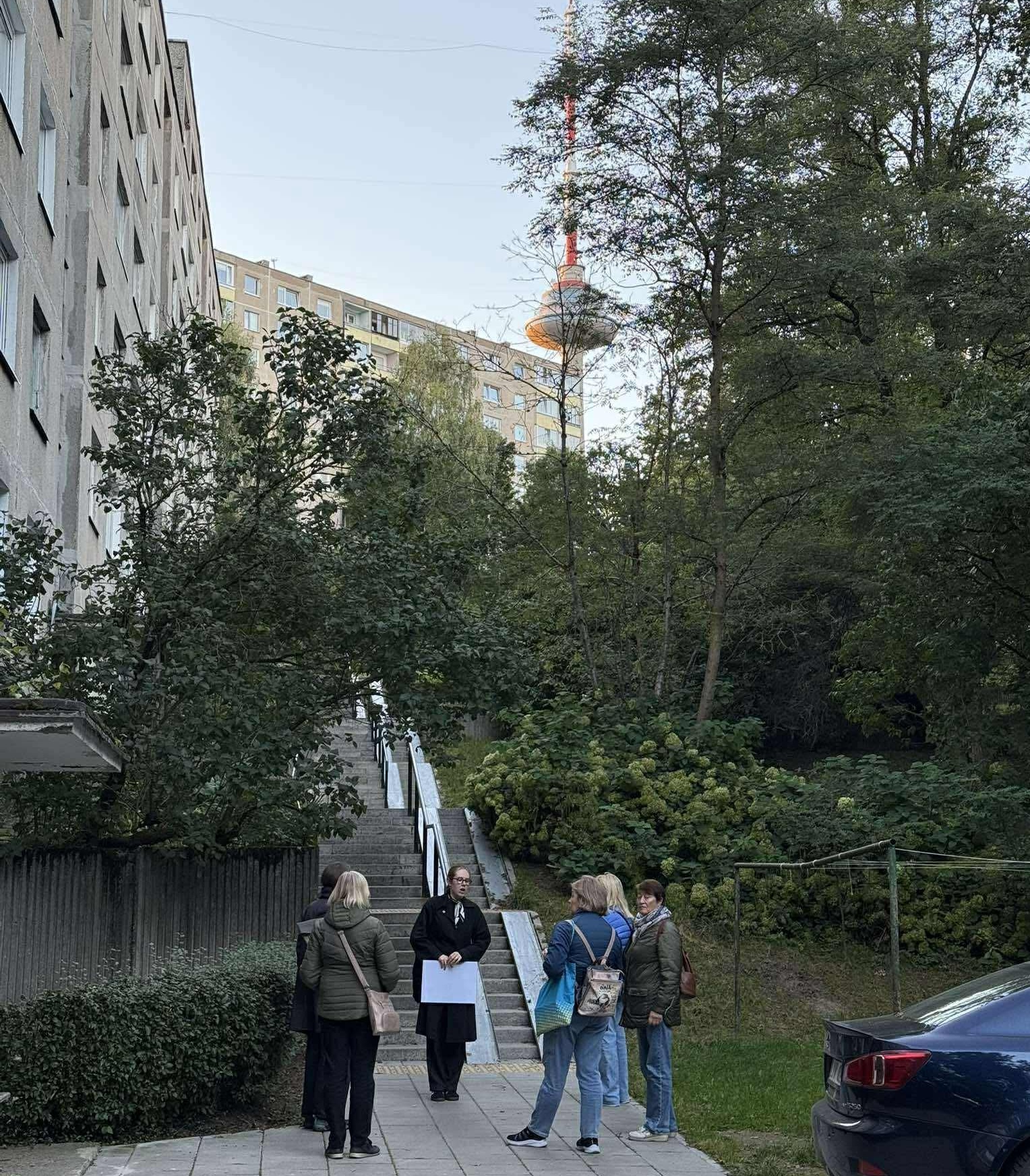
All lectures were accompanied by tours around the district with doctoral student Ineta Šuopyte-Butkiene. During these tours, it was possible to apply the knowledge gained in the lectures in practice: to become familiar with the formal values and structure of Lazdynai up close, to see its colors, to touch the textures of concrete, and to view one’s own or an unfamiliar neighborhood with fresh eyes. Altogether, the events opened space for new, more nuanced narratives to emerge, fostering a more informed and appreciative understanding of Lazdynai as a living and valuable heritage site. Hopefully it also renewed attention toward Lazdynai’s layered heritage and its continuing relevance today.