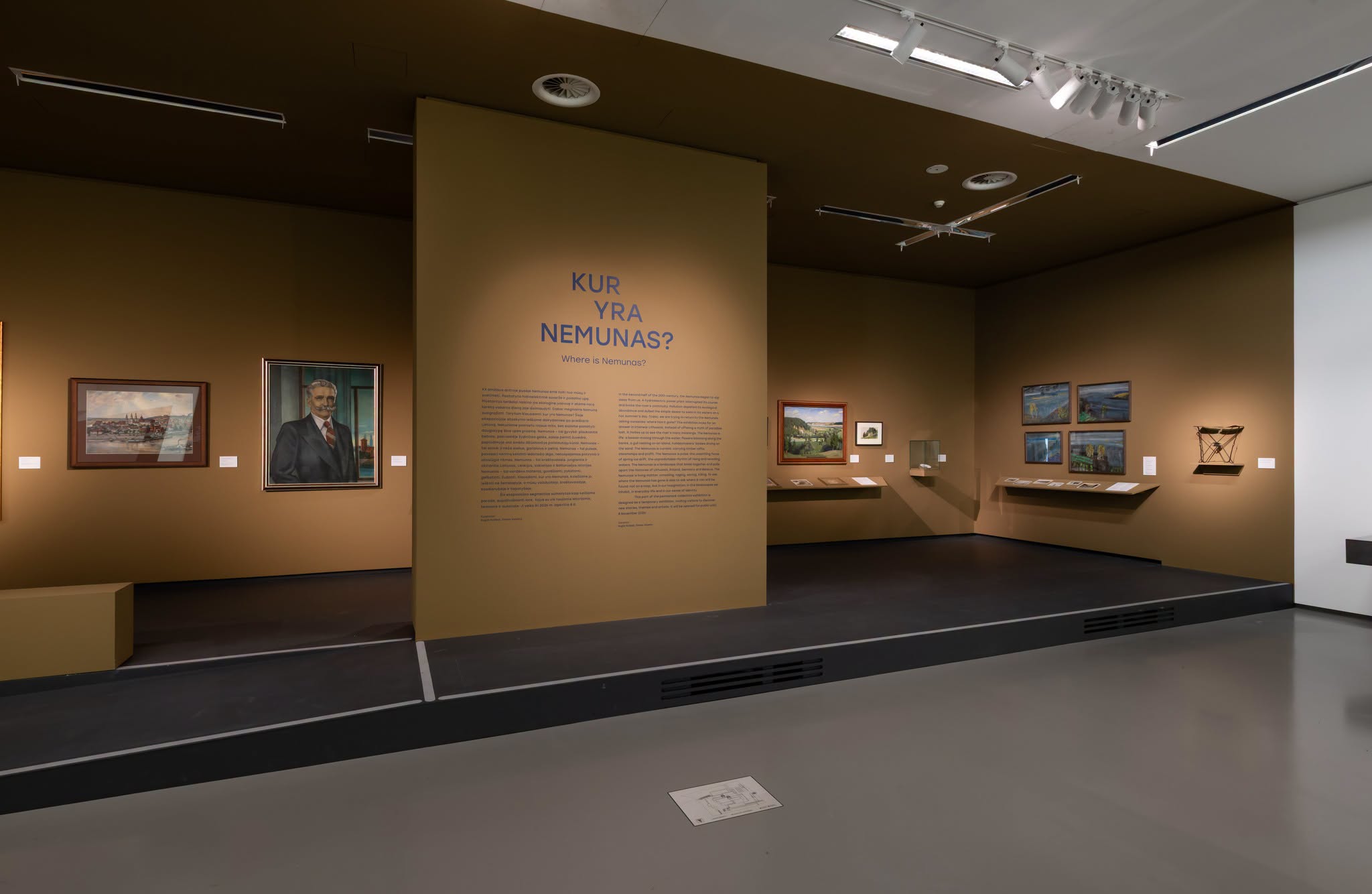
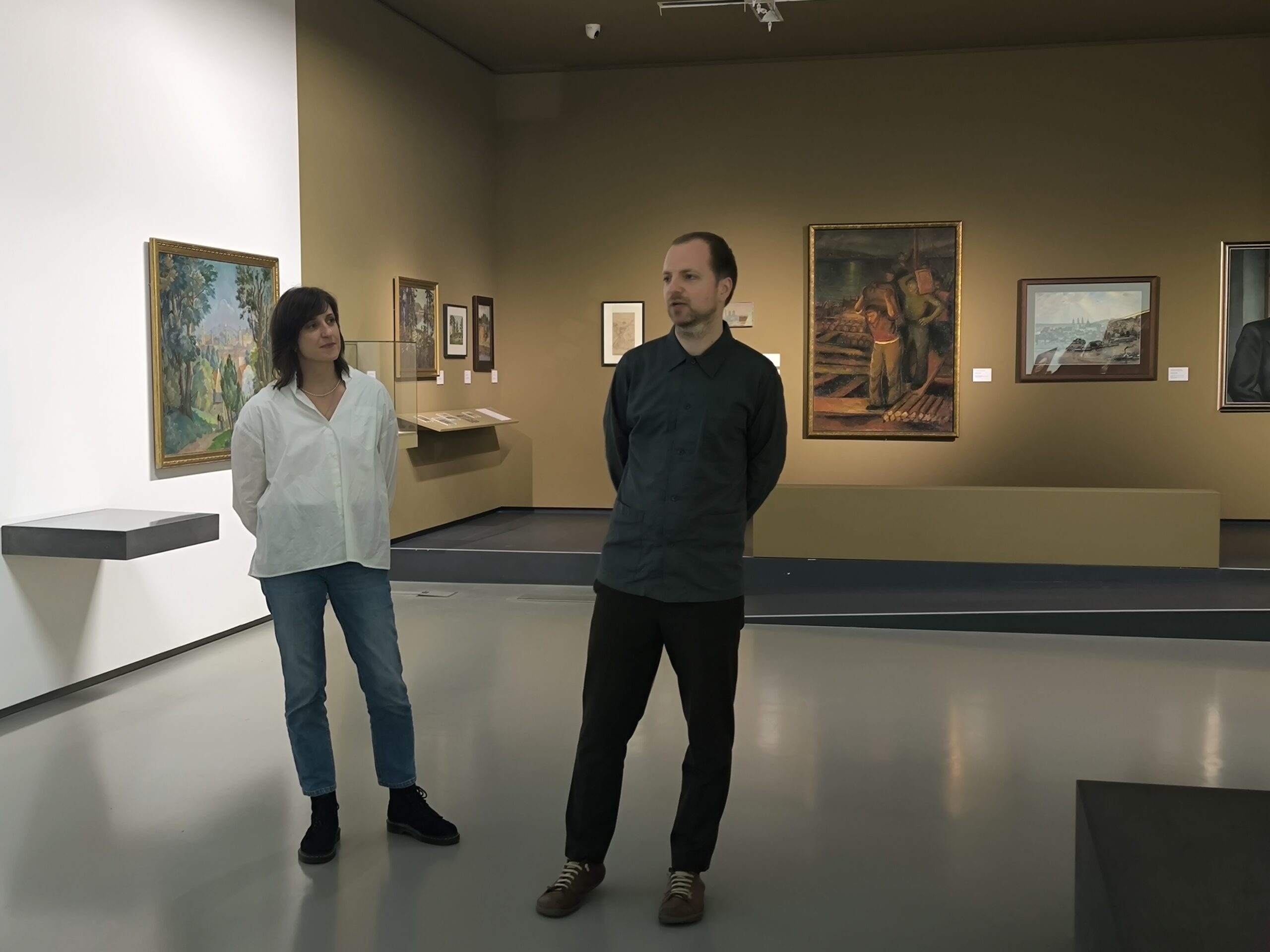
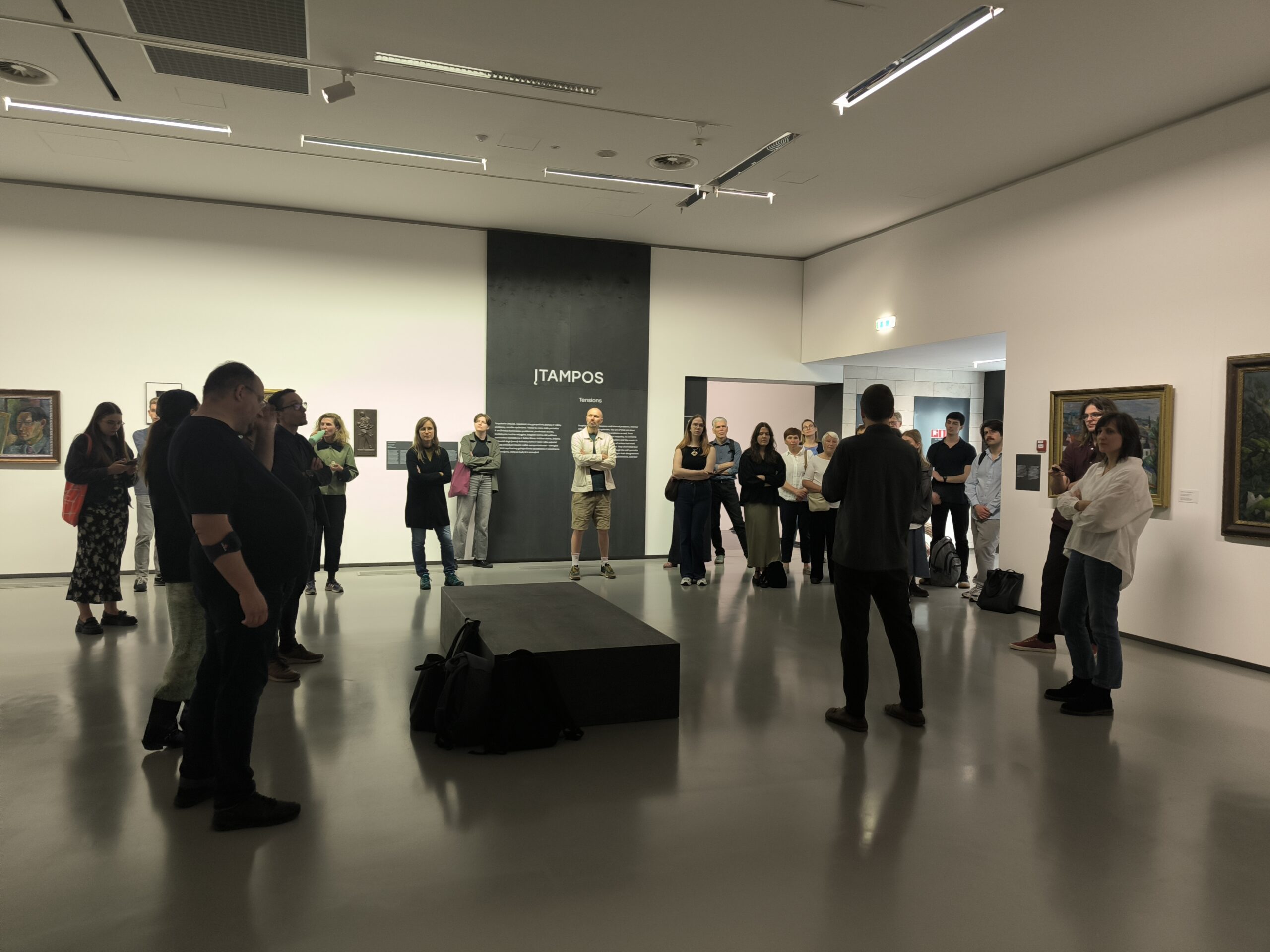
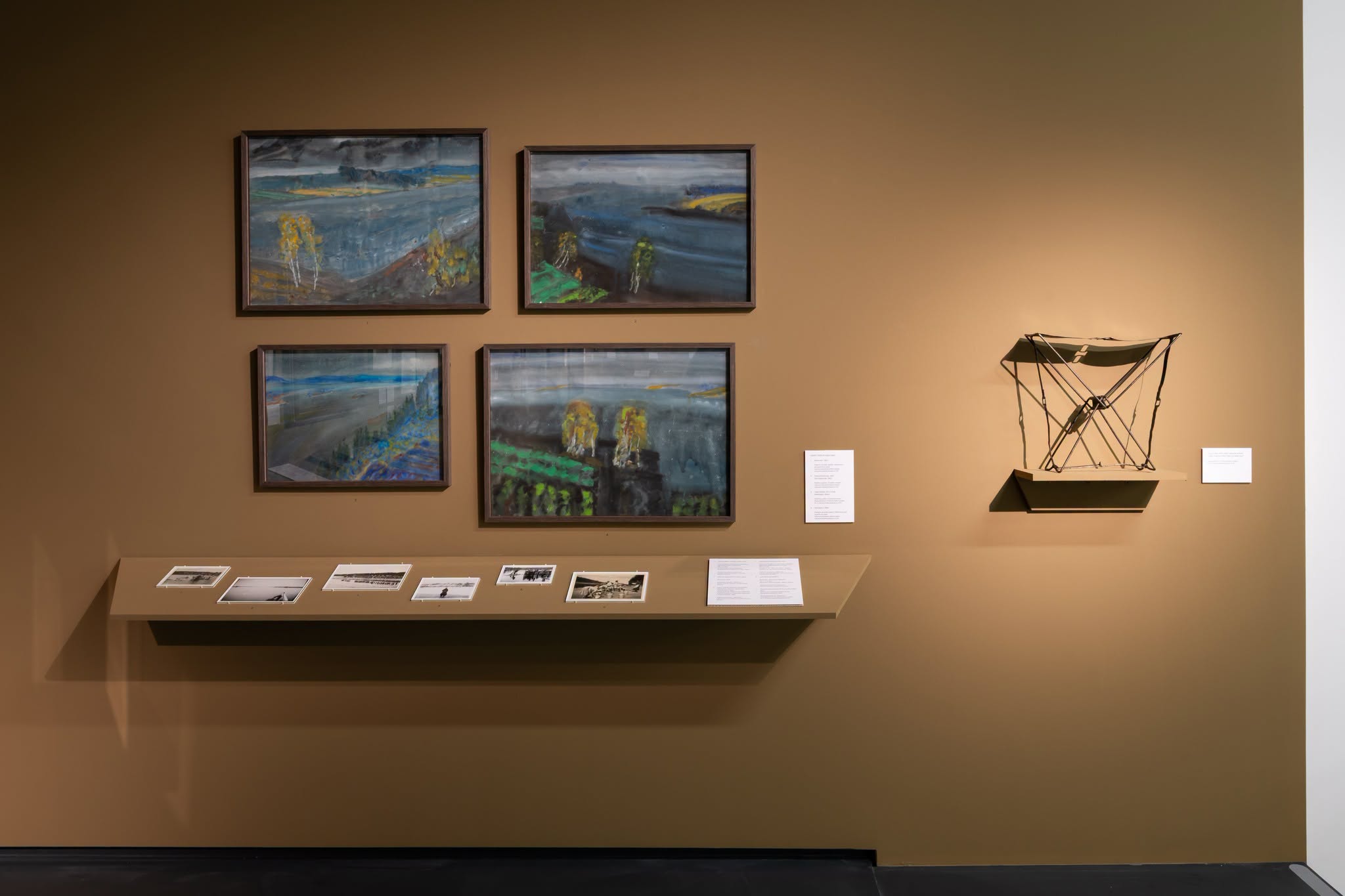
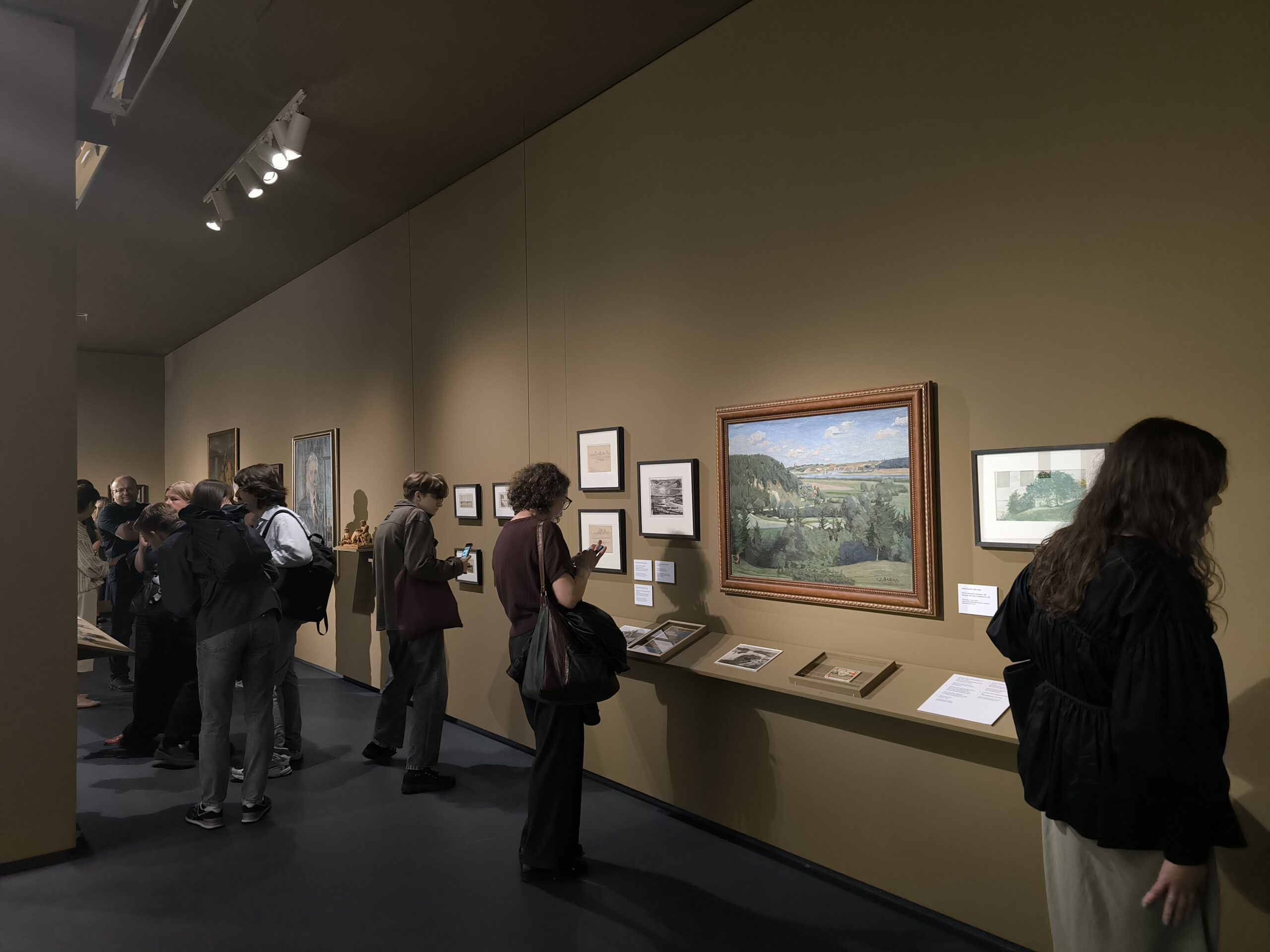
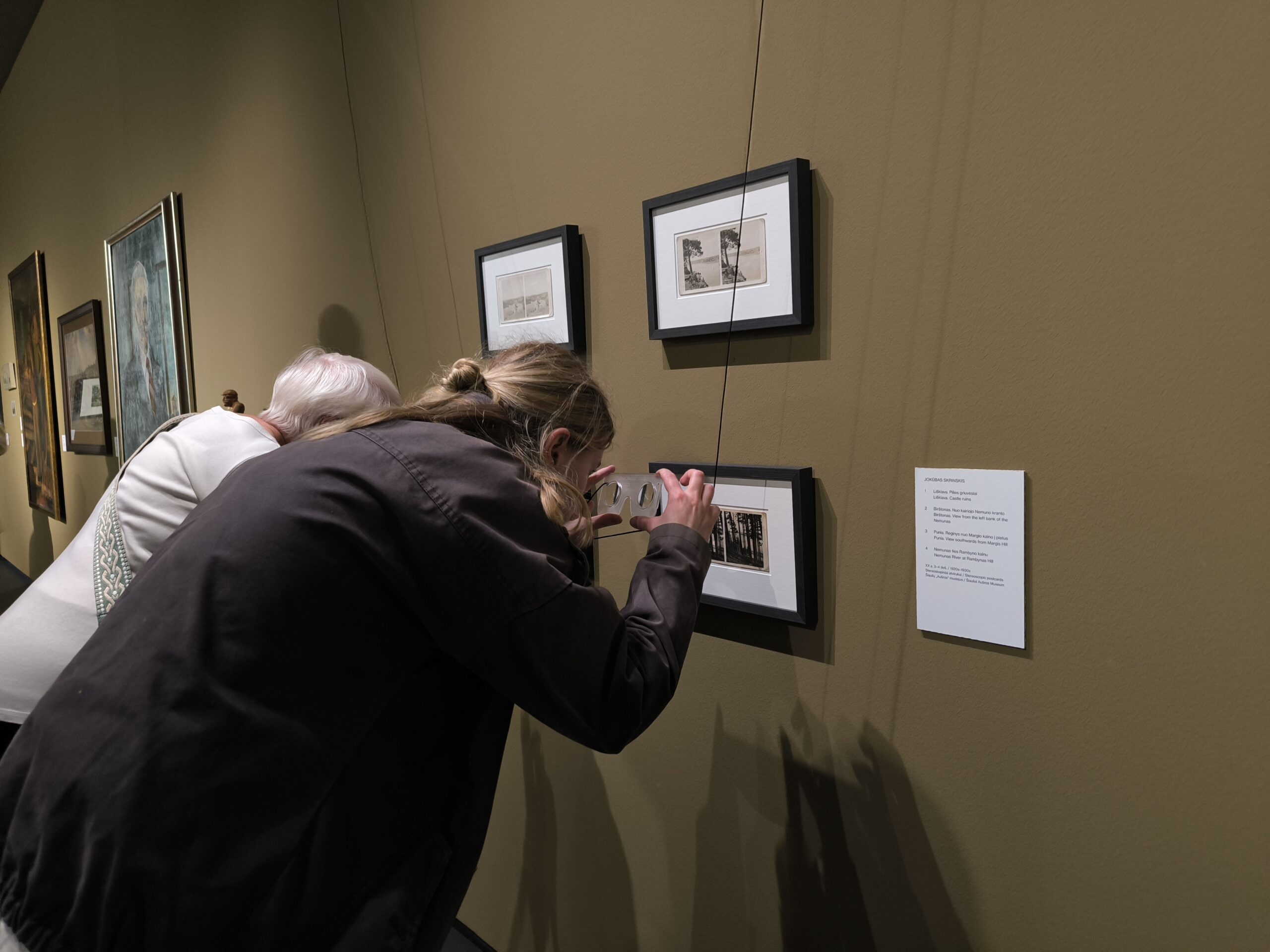
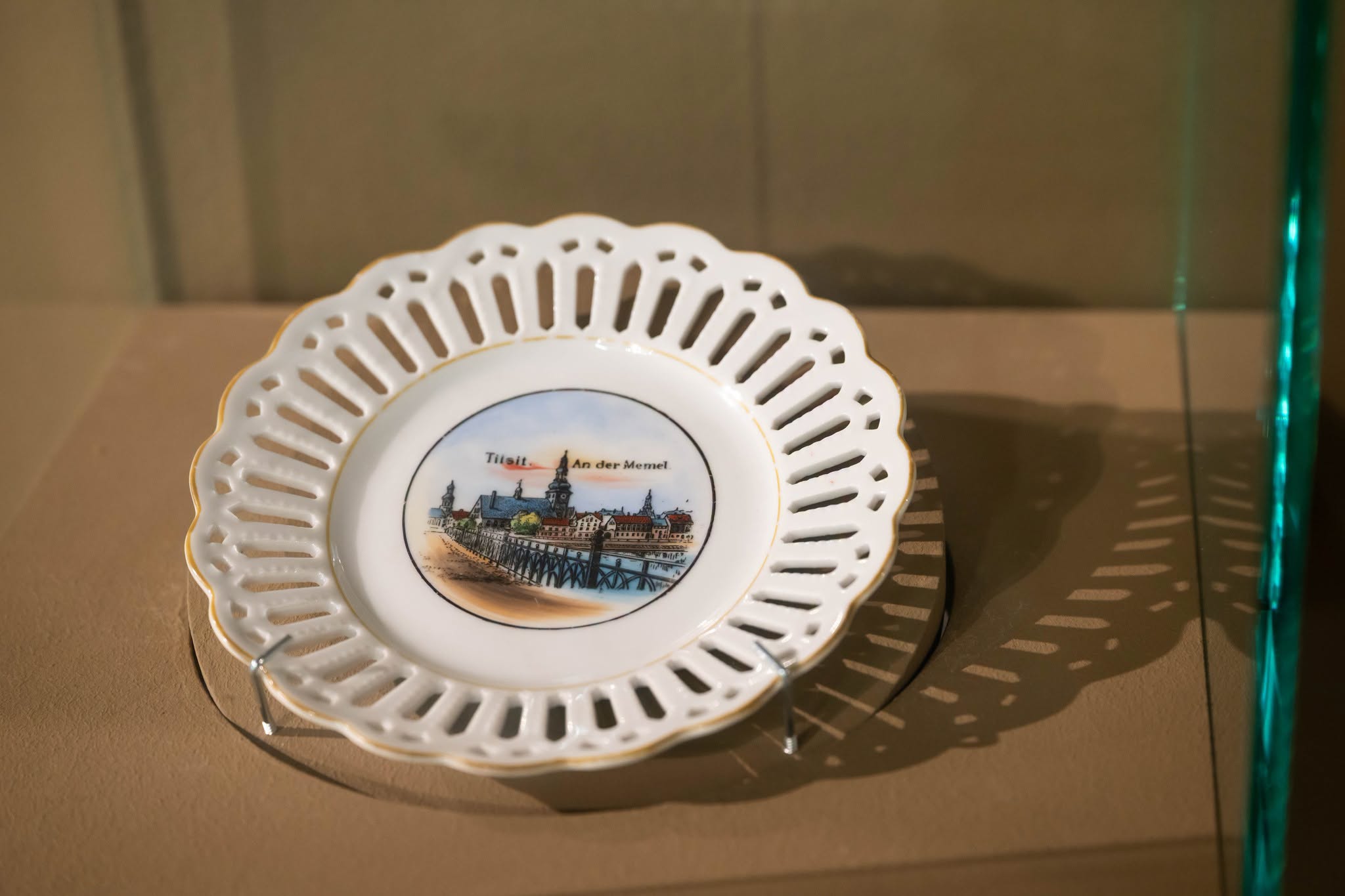
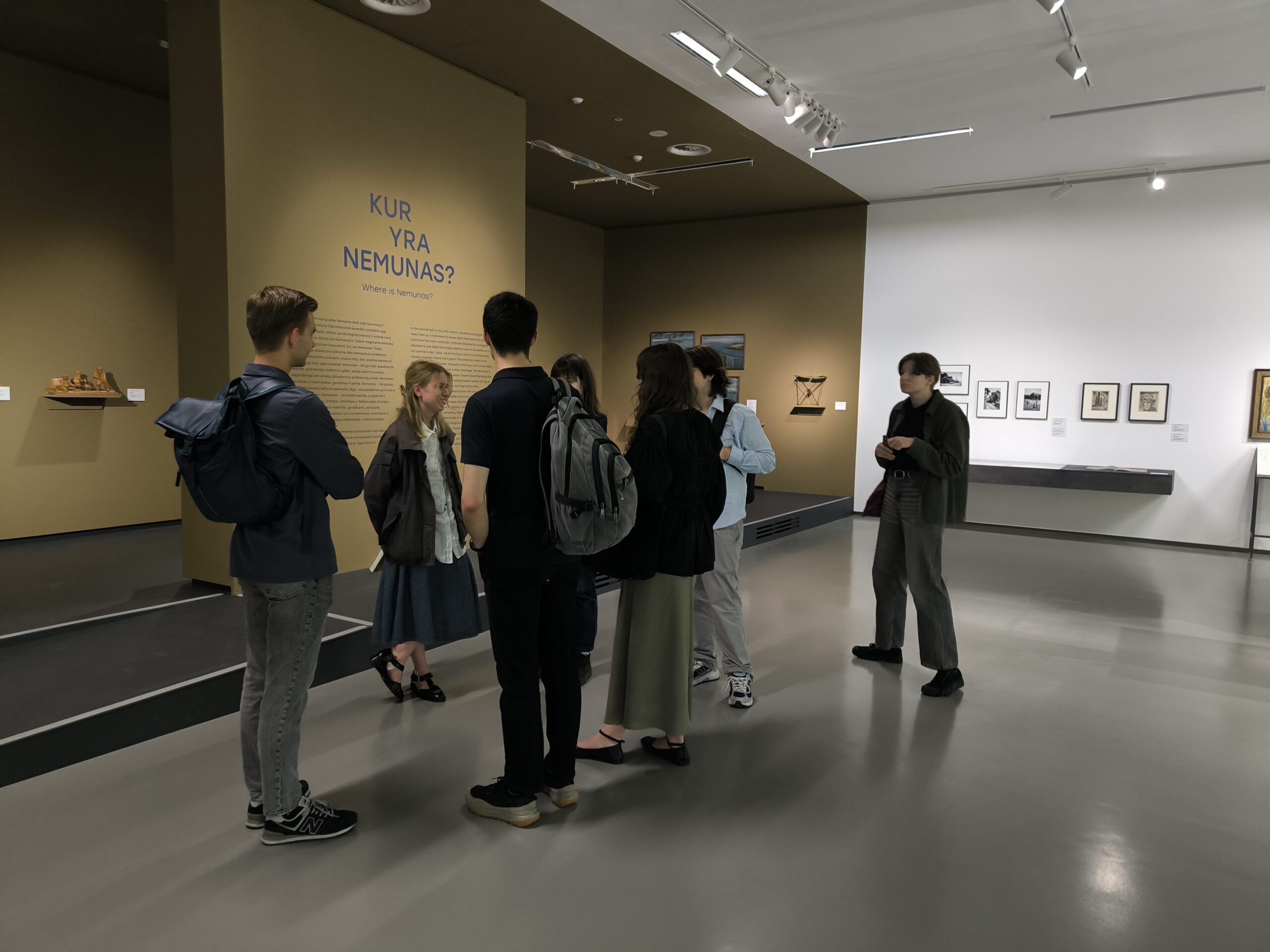
On June 11, the National Gallery of Art opened the exhibition Where Is Nemunas?, curated by PAScapes historians Rugilė Rožėnė and Tomas Vaiseta. The exhibition invites visitors to search for Lithuania’s largest river not on a map, but in imagination, landscape, everyday life, and identity.
As T. Vaiseta explained during the opening, the idea for the exhibition emerged in the context of PAScapes’ ongoing research. Following the establishment of the research center, the team considered what the key objects of research on (post-)authoritarian landscapes should be. This led them to the Nemunas, which, as it turned out, provides a remarkable lens through which to observe the major environmental transformations that took place in twentieth-century Lithuania – from the massive Kaunas Hydroelectric Power Plant project to countless micro-transformations that reshaped living environments, communities, and people’s relationship with the river.
“We work with the hypothesis that the Nemunas has grown distant from the communities living alongside it – they may still reside near the river, but they have turned away from it. Perhaps it is a strong word, but a kind of wasteland has emerged, connected to the fact that the hydroelectric power plant effectively divided the river into two parts, while industrialization intensified pollution. All of this created a world that is deeply interesting to us and, I believe, should be of interest to all of Lithuania – to all of us who live in this environment. We believe it is important to ask what happened to the world alongside the Nemunas, the world that the Nemunas itself created. That is how we began our research and our work with students. We first invited them to examine how the Nemunas is reflected in art and visual sources. What you see today is, in a sense, also the result of our collaboration with students – they offered us many valuable insights,” said T. Vaiseta.
Curator R. Rožėnė explained that the interwar period was chosen as the exhibition’s point of departure because, in order to understand transformation, one must first understand what was being transformed. The findings, according to the historian, were initially somewhat surprising: although during the Soviet period the Nemunas was grandly referred to as the father of rivers and seemed likely to have held similar significance during the interwar years, it appeared in art much less frequently and far more fragmentarily than expected.
“Little by little, we began to search again for our relationship with what we were seeing, and as a result, our relationship with what we were looking for also changed,” reflected R. Rožėnė.
According to her, the research first required redefining the very concept of the river – not simply as a riverbed or a landscape, but as a current, a body of water, floods, low-water periods, and a living ecosystem. Another important realization also emerged: the Nemunas is not only a natural object but also a cultural one, carrying different meanings for the people who live along its banks.
“The Nemunas is specifically about the Nemunas – not just about rivers in general. It reveals itself in a highly fragmented way, because people living on the left bank perceived it differently, it existed differently in the territory of East Prussia, and there are Lithuanian and Polish Nemunases. These are distinct parts with their own cultures. This diversity is further expanded by the different artistic conventions through which the Nemunas has been represented across various art forms. What you will see today is a kind of mosaic – we sought to encompass as wide a variety of visual representations as possible. Yet much of the German, Jewish, or Polish Nemunas has survived only in fragments, through isolated works and scattered references. Likewise, we find very little of the Nemunas as water, as matter, or as a world of animals and plants. Therefore, this exhibition is not only about what we discover but also about what we fail to discover. It allows us to see how the Nemunas has been represented canonically while also revealing just how much of it has remained outside the realm of art and our institutions of memory,” said R. Rožėnė.
Finally, according to T. Vaiseta, the exhibition is an attempt to pose provocative questions: What is the Nemunas as a river? Can we see the Nemunas from different perspectives? Is it possible to see it from the perspective of the Nemunas itself, from the river’s own point of view? How can we understand our relationship with the Nemunas through art and works of art? Is the Nemunas merely a landscape? Is this the entirety of the Nemunas that we are capable of seeing?
Visitors are invited to explore the exhibition and reflect on the questions raised by its curators until November 8.
Text by: Agnė Kereišiūtė
Photos by: A. Kereišiūtė, Gintarė Grigėnaitė